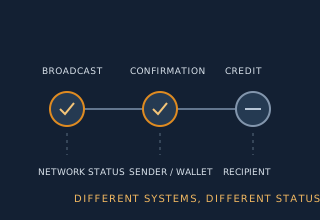
Bitcoin gambling Australia sits at the intersection of two very
different systems: a fast, globally accessible payment network and a
strict national regulatory framework. The key point for Australian
players is simple—Bitcoin changes how money moves, but it does not
change which gambling services are permitted under the Interactive
Gambling Act 2001 (IGA). What it does change is practical access,
payment efficiency, and the level of operator research a player
should complete before depositing. This guide from the Evo Casino
editorial team covers the legal context, how crypto casino deposits
and withdrawals work, what to check in a Bitcoin gambling site, and
how to set responsible limits while exploring international
platforms.
Is Bitcoin Gambling Legal in Australia?
Bitcoin’s status as a payment method does not override Australian
gambling law. The
Interactive Gambling Act 2001
remains the primary authority for interactive gambling services
offered to customers in Australia. Under the IGA, prohibited
interactive gambling services include classic online casino table
games such as roulette, poker, craps and blackjack, as well as
online pokies. Unlicensed regulated interactive gambling services
are also restricted. Bitcoin does not create a legal exemption; it
is simply the payment rail used by an operator.
The Australian Communications and Media Authority, or
ACMA, enforces these rules. The regulator investigates services that
may be operating in breach of the IGA and has been blocking illegal
gambling and affiliate websites since November 2019. By 24 September
2026, ACMA reported that 1,822 illegal gambling and affiliate
websites had been blocked. These enforcement actions apply
regardless of whether a site supports Bitcoin, Ethereum or any other
digital asset.
For Australian consumers, this means online casino sites that accept
Bitcoin are usually offshore platforms operating under an overseas
licence. Access to such platforms does not equal Australian
licensing, consumer protection or regulatory approval. It also does
not automatically mean a player can recover funds through Australian
dispute-resolution channels if something goes wrong. Before using
any crypto gambling site, check the operator’s licence, terms and
current Australian availability independently.
| Category |
Licence status |
Game types |
Payment methods |
Consumer protections |
| Australian-licensed wagering |
State or territory licence |
Sports, racing, lotteries where permitted |
Debit card, bank transfer, approved methods; digital currency
restricted for relevant licensed services from 11 June 2024
|
Domestic complaints processes, responsible gambling
obligations
|
| Prohibited interactive gambling services |
Not licensed for Australian customers |
Online pokies, online blackjack, roulette, poker and other
casino-style games
|
Various, including crypto on offshore sites |
Limited or no Australian regulatory protection |
| Offshore crypto casino |
Overseas licence, such as Curaçao or Malta |
Slots, live dealer, crash, table games, sportsbook |
BTC, ETH, LTC, USDT and other coins |
Subject to foreign regulator; Australian protections generally
do not apply
|
-
The IGA restricts offering prohibited interactive gambling
services and unlicensed regulated services to customers in
Australia.
-
ACMA enforces the IGA, investigates illegal operators, and blocks
websites found to breach the law.
-
Cryptocurrency is a payment method, not a legal exemption.
Australian gambling rules still apply.
Quick legal check flowchart: Australian licence
check → permitted service and payment check → operator terms review
→ deposit only after all three checks are confirmed.
What the Interactive Gambling Act 2001 Prohibits
The IGA prohibits the provision of interactive gambling services to
Australians where the service is a prohibited interactive gambling
service or is not licensed. In plain English, that includes online
casino games such as poker, craps, blackjack and roulette played
over the internet, along with online slot machines. The IGA also
restricts advertising for these services and places limits on
payment methods for relevant interactive wagering services.
For digital currencies, the nuance matters: the IGA does not simply
ban Bitcoin as a technology, but Australian rules identify digital
currency among payment methods that cannot be used for certain
licensed interactive wagering services. ACMA’s guidance states that
consumers cannot use credit cards or digital currency to place bets
with relevant licensed interactive wagering services from 11 June
2024. This creates a practical split—Australian-licensed betting
brands operate under domestic rules, while offshore crypto casinos
fall outside that framework and are often blocked or restricted.
| Product |
Regulatory question to ask |
| Online pokies |
Is the service licensed in Australia? Online pokies are
generally prohibited interactive gambling services.
|
| Roulette |
Is this offered as an online casino game? If yes, it falls
under prohibited services when offered to Australians.
|
| Blackjack |
Same test—online casino-style blackjack is restricted under
the IGA.
|
| Poker |
Internet poker is a prohibited interactive gambling service in
most Australian contexts.
|
| Pre-match sports betting |
May be offered by Australian-licensed wagering providers.
Verify the licence on the official register.
|
| In-play betting |
Restrictions apply. Players should confirm current ACMA
guidance for the specific service type.
|
- Verify the operator’s Australian licence before depositing.
-
Confirm that the specific game type is permitted for the licence
held.
-
Check payment restrictions, including the 11 June 2024 digital
currency rule for relevant licensed wagering services.
-
Review the operator’s terms for withdrawal, KYC and dispute
procedures.
Australian-Licensed Sports Betting Versus Crypto Casinos
Australian-licensed wagering providers operate within a different
framework from offshore crypto casinos. Sports and racing wagering
are regulated at the state and territory level, with domestic
licence conditions, dispute pathways and consumer safeguards. Online
casino games, by contrast, face much stricter restrictions under the
federal IGA. A Bitcoin casino that offers slots, live blackjack or
roulette to Australian users is almost certainly an offshore
operation rather than an Australian-licensed venue.
ACMA guidance makes one point especially relevant for this guide:
digital currency is prohibited for relevant licensed interactive
wagering services from 11 June 2024. That means an
Australian-licensed sportsbook should not be accepting Bitcoin
deposits from Australian customers. If a platform advertises itself
as an Australian-licensed betting brand and accepts BTC, players
should treat that combination as a red flag and verify the claim on
the official
ACMA online gambling services page.
| Factor |
Australian-licensed sports betting |
Offshore crypto casino |
| Products |
Sports, racing, permitted wagering |
Slots, table games, live casino, crash games |
| Licensing |
State or territory regulator |
Foreign regulator such as Curaçao or Malta |
| Bitcoin acceptance |
Restricted for relevant licensed services from 11 June 2024
|
Commonly accepted |
| Principal regulatory risk |
Compliance with Australian licence conditions |
Overseas enforcement, website blocking, limited local recourse
|
-
Ask which regulator issued the licence and verify it on the
regulator’s own register.
-
Ask whether the specific game you want to play is permitted for
the licence held.
-
Ask whether the cashier actually supports Bitcoin for your
transaction direction.
-
Ask about withdrawal limits, KYC triggers and complaint procedures
before depositing.
How Bitcoin Casinos Work for Australian Users
The customer journey on a Bitcoin casino is similar to a traditional
online casino, but the payment layer is different. A player first
sets up a Bitcoin wallet, acquires BTC through an Australian
exchange such as CoinSpot, Swyftx or Independent Reserve, and then
sends BTC to a deposit address supplied by the casino. Once the
transaction is broadcast and confirmed by the network, the casino
credits the account according to its internal confirmation policy.
It is important to separate network speed from casino speed. A
Bitcoin transaction can be broadcast within seconds, but
confirmation times average around ten minutes per block and can vary
with network demand. The casino’s own approval process, KYC checks,
game provider settlement and withdrawal review can take longer.
Marketing language promising instant withdrawals should never be
accepted at face value without reading the cashier terms.
| Stage |
What happens |
Typical risks and checks |
| Registration |
Create an account with email or social login |
Read terms and privacy policy; check KYC triggers |
| Deposit |
Send BTC to the casino’s deposit address |
Confirm asset, network, address and minimum deposit |
| Confirmation |
Blockchain confirms the transaction; casino credits balance
|
Confirmations required vary by operator |
| Gameplay |
Use balance or bonus funds on supported games |
Check game contribution rates and maximum bet rules |
| Withdrawal |
Request a payout to a valid wallet |
KYC, source-of-funds, wagering and cashout limits |
| KYC |
Identity, address and wallet verification if triggered |
Can delay first withdrawal; prepare documents in advance
|
-
Check the deposit address character by character before
authorising a transfer.
- Select the correct network—BTC on the Bitcoin base chain.
-
Confirm the minimum deposit and any confirmation threshold in the
casino’s cashier.
-
Avoid using an exchange wallet for casino transactions where
possible; use a personal wallet you control.
-
Do not rely solely on the blockchain explorer for credit
confirmation; casino approval is separate.
Wallet-to-casino transaction diagram: personal
wallet → BTC address → broadcast and blockchain confirmations →
casino internal credit review → balance available. Blockchain
confirmation does not guarantee instant casino approval.
Bitcoin, Stablecoins and Other Supported Cryptocurrencies
Bitcoin is the headline asset, but many international crypto casinos
accept a broader range of digital currencies. Ethereum, Litecoin,
Tether and other stablecoins regularly appear in casino cashiers.
Each asset operates on its own network or token standard, and
sending a coin through the wrong network can result in permanent
loss.
Bitcoin itself is the most widely accepted crypto gambling asset.
Its public transaction history, fixed supply schedule and deep
liquidity make it the default funding method for many users.
Ethereum introduces smart contract flexibility, but gas fees can be
high during periods of network congestion. Litecoin offers faster
block targets. USDT and USDC are stablecoins pegged to the US
dollar, which reduces price volatility between deposit and
withdrawal—at the cost of adding a custodian to the equation.
| Asset |
Volatility |
Transaction fees |
Confirmation considerations |
Common operational risks |
| Bitcoin (BTC) |
High |
Variable by network demand |
Around 10 minutes per block on average |
Irreversible mistakes, public ledger |
| Ethereum (ETH) |
High |
Gas fees vary significantly |
Typically faster than BTC, but congestion can delay |
Wrong network or token standard |
| Litecoin (LTC) |
Moderate |
Generally lower |
Faster block targets than BTC |
Smaller liquidity on some sites |
| Tether (USDT) |
Low |
Varies by network |
Depends on selected chain |
Custodian and network mismatch |
- Confirm the exact asset the casino expects before sending.
-
Confirm the network or token standard—Bitcoin base chain versus
Lightning, ERC-20 versus TRC-20.
-
Check the wallet fee and the amount that will arrive after network
fees.
-
Send a small test transaction when using a new address or casino
for the first time.
-
Never reuse a deposit address from an expired session without
checking the cashier again.
How to Evaluate a Bitcoin Gambling Site
Evaluating a Bitcoin casino is not about headline bonuses alone. A
useful comparison framework covers licensing, ownership
transparency, security controls, game fairness, payment terms,
withdrawal rules, support quality and responsible-gambling tools. An
overseas licence does not automatically provide the same protections
as an Australian-regulated service, and ACMA has warned that illegal
services may lack important customer protections and expose users to
financial risk.
The practical approach is to treat every marketing claim as
unverified until you can confirm it on an official record. Check the
legal entity behind the brand, the licence number, the regulator’s
public register, the terms URL and the current withdrawal policy.
Compare the operator’s stated facts with what the regulator actually
lists, rather than relying on a logo displayed on the homepage.
| Operator |
Licence and regulator |
AU availability |
Bitcoin support |
Minimum deposit |
KYC requirements |
Withdrawal limits |
Game providers |
RG tools |
Review date |
| BitStarz |
Typically advertised under Curaçao licence |
Offshore availability; verify current access and terms |
BTC plus other coins |
Varies by asset |
May trigger for withdrawals |
Operator-specific |
Pragmatic Play, Play’n GO, NetEnt and others |
Limits, self-exclusion |
Update needed |
| Stake.com |
Curaçao or other overseas licence claims |
Offshore; access restrictions may apply in Australia |
BTC, ETH, LTC and stablecoins |
Varies |
Account verification may apply |
Cashout policy varies |
Evolution, Pragmatic Play, in-house originals |
Limits, cool-off |
Update needed |
| BC.Game |
Foreign licence claims |
Offshore; no AU licence |
Multi-coin support |
Low minimums advertised |
May vary by threshold |
Operator terms apply |
Various slot and live providers |
Limits |
Update needed |
-
Verify the operator’s legal entity and licence number on the
regulator’s official register.
-
Check ownership transparency—who operates the site and where the
company is registered.
- Read the full terms and privacy policy before registering.
-
Look for SSL encryption and two-factor authentication
availability.
-
Confirm which game providers supply the casino and whether the
games are independently audited.
-
Review deposit minimums, withdrawal limits and KYC triggers before
funding.
-
Check responsible-gambling tools: deposit limits, session limits,
cooling-off and self-exclusion.
-
Search for current ACMA
enforcement notices
referencing the brand.
-
Test customer support response time and quality with a
non-critical question.
-
Record the review date and re-check terms before each significant
deposit.
Trust-score weighting example: licensing and
ownership 30%, security and fairness 25%, payment and withdrawal
terms 25%, support and RG tools 20%. A high bonus offer does not
raise the trust score.
Licence, Ownership and Regulatory Checks
An offshore crypto casino often displays a licence from a
jurisdiction such as Curaçao, Malta, Costa Rica or Kahnawake. The
correct verification method is to find the exact legal entity and
licence number on the site, then cross-check that number on the
regulator’s own public register. Relying on a footer logo is not
sufficient because copied or expired licence references do appear in
the industry.
Curaçao and Malta are among the most commonly referenced regulators
for international crypto casinos. Malta’s Malta Gaming Authority
maintains a public licence register for authorised operators, while
Curaçao licences are administered through authorised sub-licence
holders. When the brand is operated under a sub-licence, check both
the master licence holder and the operator entity.
| Operator claim |
What to verify |
| Licence number |
Search the number on the regulator’s official register |
| Legal entity name |
Confirm it matches the entity listed by the regulator |
| Registered address |
Check for consistency with the regulator’s record |
| Terms URL |
Read full terms and note any contradictory withdrawal rules
|
| Complaints process |
Confirm a real email or portal and the expected response
window
|
- Missing ownership information is a warning sign.
-
Copied or vague terms may indicate low operational transparency.
- An unverifiable licence number should prevent a deposit.
-
Contradictory withdrawal rules between the cashier and the terms
page are a red flag.
Fairness, RTP and Provably Fair Games
Return-to-player percentage, house edge and variance are the core
statistical concepts for casino games. RTP tells you the theoretical
return over a very large number of rounds, while house edge is the
mathematical advantage the operator holds. A slot such as Play’n
GO’s Book of Dead lists an RTP around 96.21%, while Pragmatic Play’s
Gates of Olympus sits near 96.50%. These figures are long-run
averages, not session guarantees.
Provably fair technology is a key differentiator for crypto
gambling. In a provably fair system, the game produces a
cryptographic hash of a seed before the round begins, and the player
can verify the outcome after the round using the revealed seed. This
applies to supported games, typically crash titles, Plinko, dice and
some in-house originals. Popular examples include Spribe’s Aviator
and various Plinko variations. Provably fair verification does not
guarantee a winning result; it only confirms that the outcome was
not changed after the bet was placed.
| Game type |
Fairness mechanism |
RTP disclosure |
Verification method |
| RNG slots |
Random number generator audited by testing labs |
Usually published by provider |
Third-party audit reports |
| Live dealer |
Physical wheel or cards with RNG equipment where applicable
|
Table-specific RTP |
Provider licensing and studio audit |
| Crash games |
Provably fair hash commitment |
Often displayed in-game |
Hash and seed verification |
| Provably fair games |
Client seed and server seed combination |
Depends on title |
Public hash verification |
- Check the game’s RTP or house edge before wagering.
-
Confirm whether the title is provably fair and how to verify a
round.
-
Look for testing-lab audit logos, then verify the report directly.
-
Treat variance as a session risk: high volatility slots can
produce long dry spells.
KYC, AML and Withdrawal Conditions
A crypto casino may request identity documents, proof of address,
source-of-funds information or evidence of wallet ownership before
processing a withdrawal. This happens because anti-money-laundering
rules require operators to know their customers and report
suspicious activity. AUSTRAC regulates digital currency exchange
providers operating in Australia under the country’s
anti-money-laundering and counter-terrorism financing laws, but a casino may apply its own KYC policy regardless of the
player’s jurisdiction.
Withdrawal conditions often include pending periods, maximum cashout
clauses, wagering completion requirements and bonus forfeiture
rules. A large win may trigger additional review, including proof
that you control the wallet address used for the payout. These
conditions are not an automatic rejection; they are standard
operational steps. Players should read the withdrawal policy before
depositing and keep transaction records and clear address proof
ready.
| Condition |
Required document or action |
Processing stage |
Potential delay |
| Identity verification |
Passport, driver licence or government ID |
Before first withdrawal |
Usually hours to days |
| Proof of address |
Utility bill or bank statement |
KYC review |
Varies by operator |
| Source of funds |
Bank or exchange statement |
Enhanced due diligence |
Can be several days |
| Wallet ownership |
Signed message or small transfer |
Withdrawal approval |
Usually quick |
| Wagering completion |
Meet playthrough before cashout |
Before payout request |
Depends on bonus terms |
-
Read the withdrawal section of the terms before you deposit.
-
Keep a copy of your identity document and a recent proof of
address.
-
Record the wallet address used for deposits and request
withdrawals to the same wallet where possible.
-
Confirm maximum cashout, weekly withdrawal caps and any dormant
account fees.
Bitcoin Casino Bonuses and Wagering Requirements
Deposit bonuses, free spins, cashback and reload offers are common
on Bitcoin casinos. The headline percentage means very little on its
own. A 100% match bonus may look strong, but the wagering
requirement, eligible games, maximum bet rule, expiry window and
maximum cashout determine whether the offer has practical value.
Wagering requirements are usually expressed as a multiple of the
bonus amount or the deposit-plus-bonus amount. For example, a 40x
requirement on a 100 AUD equivalent bonus means you must wager 4,000
AUD before withdrawing. If the 40x applies to deposit-plus-bonus on
a 100 AUD deposit that receives a 100 AUD match, the required
playthrough becomes 8,000 AUD. Always check which basis applies
because it can double the effective requirement.
| Bonus factor |
What to verify |
| Wagering basis |
Bonus funds only or deposit plus bonus |
| Eligible games |
Slots, table games or excluded titles |
| Contribution rate |
Slots often 100%, table games lower |
| Expiry |
Time limit to complete wagering |
| Maximum bet |
Bet size cap while a bonus is active |
| Maximum cashout |
Withdrawal cap on bonus-related winnings |
-
A short expiry can invalidate a bonus before playthrough is
realistic.
-
A low game contribution rate reduces progress toward the
requirement.
-
Exceeding the maximum bet can void the bonus and associated
winnings.
-
A maximum cashout cap can make a large bonus less valuable than it
appears.
- Read the full bonus terms before accepting any offer.
Bitcoin Deposits and Withdrawals: Fees, Limits and Timing
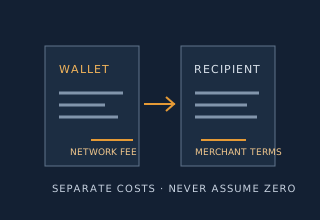
Bitcoin transactions have two fee layers. The first is the
blockchain network fee, which varies with transaction size, network
demand and wallet policy. The second is any exchange or custodian
fee charged when converting AUD to BTC or BTC back to AUD, along
with any FX spread. The casino itself may also apply internal
processing fees or minimum withdrawal thresholds. None of these
should be assumed to be zero.
Timing follows the same layered logic. A Bitcoin transaction can be
broadcast immediately after signing, but the network’s block
confirmation target is around ten minutes, and actual confirmation
times vary with mempool congestion. The casino then applies its own
internal approval process, which can include KYC review, bonus
checks and risk assessment. Marketing terms like “instant
withdrawal” describe only one stage of the process, not the entire
journey from request to bank account.
| Stage |
Typical variable |
Who controls it |
| Exchange AUD to BTC |
Exchange fee and spread |
Australian exchange such as CoinSpot, Swyftx or Independent
Reserve
|
| Wallet transfer |
Network fee and confirmation time |
Bitcoin network demand and wallet policy |
| Casino credit |
Internal approval time and confirmation threshold |
Casino operations |
| Withdrawal request |
KYC review and pending period |
Casino compliance team |
| BTC payout |
Broadcast and network confirmations |
Sender and blockchain |
| BTC to AUD |
Exchange fee and market price movement |
Exchange or custodian |
-
Review the effective network fee in your wallet before sending.
- Confirm the exact amount that will arrive after fees.
-
Check the casino’s minimum deposit, minimum withdrawal and daily
or weekly caps.
-
Choose the correct network and double-check the address string.
-
Keep the transaction hash until the casino has credited the
balance and you have confirmed the payout.
Tax, Privacy and Financial Risks of Bitcoin Gambling
Bitcoin transactions are recorded on a public blockchain. That means
Bitcoin is not anonymous by default; the transaction history is
permanent and visible to anyone who can associate a wallet address
with a person. Using Bitcoin for gambling does not make income or
assets automatically tax-free either. The
Australian Taxation Office
advises that crypto assets received as prizes may have a market
value that becomes relevant when the asset is later sold or
exchanged, potentially creating a capital gain or loss. The tax
treatment depends on the individual’s circumstances, and
professional advice is appropriate where amounts are material.
Financial risk in Bitcoin gambling comes from several sources at
once. Price volatility can erode a balance between deposit and
withdrawal. Irreversible transfers mean a mistyped address or wrong
network can result in total loss. Exchange and wallet credentials
are targets for phishing and theft, so two-factor authentication and
private key discipline are essential. The offshore nature of many
crypto casinos also limits practical dispute remedies compared with
domestic regulated services.
| Risk category |
Specific risk |
Practical impact |
| Gambling |
Loss of deposited funds |
No guaranteed recovery; house edge applies over time |
| Cryptocurrency |
Price volatility |
Balance value can change before withdrawal |
| Privacy |
Public transaction history |
Wallet activity may be traceable |
| Legal and regulatory |
Offshore enforcement and website blocking |
Access can change without notice |
-
Keep a record of every deposit, withdrawal and conversion,
including AUD values at the time of transaction.
-
Enable two-factor authentication on exchange, wallet and casino
accounts.
-
Use a dedicated wallet for gambling activity rather than a
long-term savings wallet.
-
Treat Bitcoin’s price volatility as a budget factor, not just a
payment convenience.
-
Seek independent tax advice if gambling outcomes or crypto
disposals are significant.
Responsible Bitcoin Gambling for Australian Players
Responsible gambling is a practical operating framework, not a
disclaimer at the bottom of a page. It includes fixed budgets,
deposit limits, session limits, cooling-off periods, self-exclusion,
loss tracking and a firm rule against using credit or borrowed
funds. Bitcoin’s fast transfers and price volatility can make
spending harder to monitor, because the AUD value of a balance
changes in real time and deposits can be approved with fewer
external friction points than a bank transfer.
Before opening any crypto casino session, decide how much you can
afford to lose and convert that amount to BTC at the time of
deposit. Set a session timer and a loss ceiling. After the session,
record the actual AUD value of the outcome and review whether the
result matched your limit. If chasing losses or depositing more than
planned becomes a pattern, use the available cooling-off and
self-exclusion tools or contact a support service.
| Warning sign |
Immediate action |
| Depositing more than planned |
Set a hard deposit limit before the next session |
| Chasing losses with larger bets |
Take a 48-hour break and review the last three sessions |
| Hiding gambling activity |
Talk to a trusted person and contact Gambling Help Online
|
| Borrowing to gamble |
Stop deposits and use a self-exclusion tool |
| Neglecting work or responsibilities |
Seek confidential counselling support |
- Set a fixed AUD budget before converting to Bitcoin.
-
Use deposit limits, session limits and cooling-off tools where
offered.
-
Never deposit money needed for rent, bills, debt repayment or
daily living.
- Track wins and losses in AUD, not just in satoshi or mBTC.
-
Take regular breaks and avoid gambling when stressed, tired or
impaired.
Free, confidential help is available 24/7 through
Gambling Help Online
or the Gambling Helpline on
1800 858 858. Both services provide counselling, self-help tools and referrals
without judgement.
Warning Signs of Gambling Harm
Gambling harm often builds gradually through repeated decisions
rather than a single event. Chasing losses, increasing stakes to
recover money, hiding transactions from a partner, borrowing money
to continue playing, neglecting work or study, and using gambling to
manage stress all deserve attention. None of these signs means a
person is beyond help; they mean the current pattern needs to
change.
Friends and family can assist by keeping the conversation calm,
focusing on observable behaviour rather than blame, and encouraging
the person to use professional support. The earlier a pattern is
recognised, the easier it is to reset habits and prevent financial
harm.
| Warning sign |
Why it matters |
Recommended next step |
| Chasing losses |
Leads to larger and faster deposits |
Take a break and set a loss limit |
| Increasing stakes |
Escalates variance and potential harm |
Return to minimum stakes for one month |
| Hiding transactions |
Breaks trust and signals loss of control |
Use transaction tracking and talk openly |
| Borrowing to gamble |
Creates debt pressure |
Stop deposits and contact Gambling Help Online |
| Gambling to manage stress |
Reinforces a harmful coping loop |
Use counselling and self-help tools |
-
Individuals can set limits, take breaks, use self-exclusion and
call 1800 858 858.
-
Friends can listen without judgement and offer to help with
practical steps.
-
Family members can separate financial management from gambling
access where appropriate.
-
Everyone can use the free tools at Gambling Help Online, including
the self-assessment.
Step-by-Step Bitcoin Gambling Safety Checklist
Before depositing into any Bitcoin gambling Australia platform, run
through a simple four-stage checklist. Before registration, verify
the operator’s identity, licence claims and current Australian
access. Before deposit, confirm payment details, wallet address,
network and limits. Before wagering, review game fairness, bonus
terms and responsible-gambling tools. Before withdrawal, check KYC
requirements, cashout caps and processing timelines. Players should
not use VPNs or other tools to bypass Australian website blocks;
ACMA identifies website blocking as an enforcement mechanism against
illegal online gambling services.
| Stage |
Checklist items |
| Before registration |
Verify legal entity, licence number, regulator register, terms
URL, complaints process and current AU availability.
|
| Before deposit |
Confirm supported asset, network, minimum deposit, address,
wallet fee, confirmation threshold and expected credit time.
|
| Before wagering |
Check RTP, provably fair availability, game contribution
rates, maximum bet while bonus active, and RG tools.
|
| Before withdrawal |
Review KYC documents, wagering completion, maximum cashout,
pending periods, wallet ownership proof and network choice.
|
-
Check the operator’s licence on the regulator’s official register.
- Do not rely on footer logos or affiliate lists.
- Read the full terms, not just the bonus landing page.
- Confirm the exact Bitcoin network before sending.
-
Use a wallet you control and enable two-factor authentication.
- Set an AUD loss limit before converting to BTC.
- Record the transaction hash and the AUD value of each move.
-
Check whether the casino offers deposit limits, session limits or
self-exclusion.
-
Review the withdrawal policy before playing through a bonus.
- Do not use a VPN to bypass blocks or licensing controls.
-
Re-check the operator’s current access and terms before each
significant deposit.
-
Contact Gambling Help Online or 1800 858 858 if gambling stops
being recreational.
Printable decision tree: Is the operator licensed
in Australia? → If yes, is the specific game permitted? → If no, is
the offshore platform listed on ACMA’s blocked-site notices? → If
access is available, have all licence, payment, KYC and withdrawal
checks been completed? → Only if all conditions are met, consider a
small test deposit within a pre-set loss limit.
Frequently Asked Questions (FAQs)
Is Bitcoin gambling legal in Australia? Bitcoin is
only a payment method; it does not change the Interactive Gambling
Act 2001. The IGA restricts prohibited interactive gambling services
and unlicensed regulated services offered to Australians. Offshore
availability does not equal Australian licensing or endorsement.
Players should read the federal legislation and current ACMA
guidance before depositing.
Can Australian-licensed betting sites accept Bitcoin?
ACMA guidance identifies digital currency among payment methods
prohibited for relevant licensed interactive wagering services from
11 June 2024. That rule affects licensed sports and wagering
operators, not offshore crypto casinos. Sports betting and online
casino gambling remain different regulatory categories under
Australian law.
Are Bitcoin casinos licensed in Australia? There is
currently no Australian casino licence that authorises online casino
games such as slots, blackjack or roulette offered to Australian
customers. A Bitcoin casino claiming an Australian licence should be
treated with caution. Overseas operators may hold a Curaçao or Malta
licence, which is not an Australian licence. Verify all claims on
the regulator’s own register.
What cryptocurrencies do Bitcoin casinos usually accept?
Most international crypto casinos accept Bitcoin, and many also
accept Ethereum, Litecoin, Tether and other assets. Do not assume a
coin is supported just because another site lists it. Confirm the
coin, network, minimum deposit, fee and withdrawal terms on the
current cashier page before sending a transaction.
Can I get help with gambling problems in Australia?
Yes. Gambling Help Online offers free, confidential, 24/7 online
counselling, self-help tools and referrals across Australia. The
Gambling Helpline can be reached on 1800 858 858. Both services are
available to anyone affected by gambling, including family and
friends, without judgement.

 BTC Accepted